Foundation vs. Concealer: What You Really Need to Know

When it comes to creating a flawless complexion, the conversation almost always starts with foundation and concealer.
These two makeup products are the backbone of most beauty routines, but they serve different purposes.
While foundation evens out your entire face, concealer targets specific imperfections—like dark circles, acne scars, or dark spots that need extra coverage.
If you’ve ever wondered how to use both for the best results, or whether you even need both, you’re not alone.
The world of makeup can feel overwhelming, especially with so many various formulations—liquid foundations, cream concealers, stick concealer, and more.
So let’s break it down step-by-step and talk about the key differences, the best way to apply them, and how to find the right products for your skin type and goals.
What Foundation Does
Think of foundation as the base layer of your makeup routine.
Its job is to create an even base, smooth out your natural skin tone, and give you a flawless finish to build on.
Foundation comes in various forms—powder foundation, liquid foundation, cream foundation, stick foundation, and even BB cream for those who prefer lighter coverage.
Different formulations offer different levels of coverage—from sheer to full. If you want something that looks like natural skin tone but just a bit more even, go for a light or medium coverage foundation.
If you want to hide redness, acne scars, or discoloration, a full coverage foundation might be your best friend.
Choosing the Right Foundation for Your Skin Type

Your skin type matters more than most people think.
- Oily skin: A matte finish or oil-free liquid foundation works best. Look for long-wear formulas that help control shine throughout the end of the day.
- Dry skin: A hydrating formula in cream foundation or liquid foundations with a dewy finish helps add moisture and gives your skin a healthy glow.
- Combination skin: You might prefer buildable coverage—something that balances oily areas and hydrates dry ones.
- Mature skin: Skip heavy powders that accentuate fine lines. Instead, opt for thin layers of liquid foundations or cream foundation that give a natural finish.
The right foundation doesn’t just match your natural skin tone—it enhances your natural beauty while giving you a smooth canvas for the rest of your makeup.
What Concealer Does
If foundation is the base, concealer is your detail tool.
It’s made for specific areas of the face that need more help, like the under-eye area, problem areas, or acne-prone skin spots that peek through your foundation.
Concealer is thicker than foundation and has higher coverage in small areas. That’s why you shouldn’t use too much concealer: a small amount goes a long way.

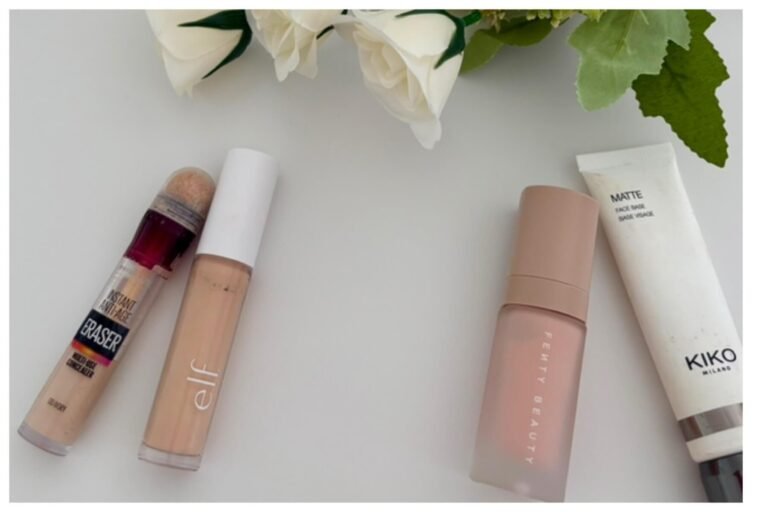
There are liquid concealers, cream concealers, and stick concealers, each with its own texture and level of coverage. For instance:
- Liquid concealers blend easily and work well under the eyes or on fine lines.
- Cream concealers are great for specific imperfections like dark spots or acne scars.
- Stick concealers are portable and convenient for spot coverage throughout the day.
A color-correcting concealer can also help if you deal with redness, dullness, or strong dark circles.
For example, peach or orange correctors cancel out blue or purple tones under the eyes, while green correctors help neutralize redness.
Key Differences Between Foundation and Concealer
Even though both products seem similar, their main differences come down to purpose, coverage, and formulation.
| Category | Foundation | Concealer |
|---|---|---|
| Purpose | To even out the entire face and create a base layer | To target specific imperfections like dark circles or blemishes |
| Coverage | Light to full coverage, depending on the formula | Medium to maximum coverage for areas of concern |
| Consistency | Usually thinner and blendable | Typically has a thicker consistency |
| Application Area | Covers the whole face | Used on specific areas of the face |
| Shade Matching | Should be an exact match to your natural skin tone | Usually a lighter shade for the under-eye area, or a matching shade for spot treatment |
How to Apply Foundation and Concealer (In the Right Order)

Many makeup beginners wonder about the best way to apply foundation and concealer. The simple answer: start with the foundation first.
Applying foundation first creates an even base, covering minor redness and discoloration. That way, you’ll know exactly where you need additional coverage with concealer.
Using foundation first also prevents you from applying too much concealer, which can lead to creasing or heaviness.
Here’s how to do it:
- Prep your skin: Start with moisturizer or primer, especially if you have dry skin or oily skin. This helps the foundation blend better.
- Apply foundation: Use a makeup sponge, damp sponge, or brush to apply thin layers. Focus on the center of your face and blend outward.
- Add concealer: Apply a small amount of liquid concealer or cream concealer on your under-eye area, problem areas, and specific imperfections.
- Blend gently: Use your ring finger, a small brush, or a damp sponge to tap it in. Don’t drag—it can disturb your base.
- Set your makeup: Finish with setting spray or powder to lock in your flawless look.
Finding the Right Shade and Formula

One of the biggest mistakes people make is using the same product for everything.
The right foundation should match your natural skin tone exactly, blending into your neck without leaving a visible line.
For concealer, you’ll need different shades depending on how you plan to use it:
- A lighter shade to brighten the under-eye area and lift the face.
- A matching shade for spot treatment or acne scars.
Pro tip: Always test your shades in natural light.
Celebrity makeup artists often say the best results come from using different finishes for different purposes, like a matte finish foundation for oil control and a hydrating formula concealer to avoid dryness under the eyes.

Foundation and Concealer for Different Skin Types
The type of foundation and concealer that works best for you depends heavily on your skin type and specific skin concerns.
Dry Skin
If your skin feels tight or flaky, go for liquid foundations with a hydrating formula.
For concealer, choose cream concealers that blend easily without clinging to dry patches.
Avoid heavy powder foundation as it can make fine lines more visible.
Oily Skin
Look for matte finish foundations with long-wear formulas that control shine.
When it comes to concealer, use a lightweight, oil-free option. Finish with setting spray or powder to keep everything in place until the end of the day.
Combination Skin
This is where balance matters.
Apply matte finish foundation in oily zones and use a dewy finish concealer in drier areas.
Mixing different finishes helps achieve a natural look.
Mature Skin
For mature skin, less is more.
Heavy full coverage foundation can emphasize fine lines. Instead, use thin layers of a hydrating formula.
Go for liquid concealers that brighten without creasing, and blend with a damp sponge for a natural finish.
Acne-Prone Skin
Use a full coverage foundation that’s non-comedogenic, meaning it won’t clog pores.
A color-correcting concealer (like green or yellow) can help tone down redness before applying your regular concealer.
The goal is spot coverage, not over-layering.
How Much Concealer and Foundation Do You Actually Need?

It’s easy to overdo it, especially with high coverage formulas.
But remember: the best foundation or concealer works better when you use less.
Applying too much concealer or foundation can lead to a cakey look and settle into fine lines.
A small amount of each product, blended properly, will always look more natural.
Celebrity makeup artists often say to “let your skin breathe.”
If you want extra coverage, it’s better to layer gradually than apply everything at once.
Common Foundation and Concealer Mistakes
Even seasoned makeup lovers make these errors:
- Using the wrong shade: Your foundation should be an exact match, while your concealer might be a lighter shade.
- Applying too much: More isn’t always better, especially under the eyes.
- Skipping prep: Foundation clings to dry patches or oil if your skin isn’t properly prepped.
- Using the same concealer everywhere: The under-eye area and acne scars need different formulations.
- Not blending enough: Always use a makeup sponge or brush for an even blend and a flawless look.

Foundation vs. Concealer: Which Should You Use?
So—do you need both? The answer depends on your personal preference and your specific skin concerns.
If you want a quick, natural look, foundation alone might do the trick. A BB cream or light powder foundation can even out your tone without looking heavy.
But if you struggle with dark circles, acne scars, or dark spots, concealer gives you additional coverage exactly where you need it.
Together, foundation and concealer can help you achieve that flawless complexion and even skin tone you’ve always wanted.
At the end of the day, it’s not about having every product, it’s about using the right products the right way. Once you understand their different purposes, you’ll see that they work best as a team.
Check out more makeup guides:
- The Ultimate Guide to Types of Lipstick: Find Your Perfect Match
- Concealer vs Highlighter: How to Know Which One to Use and When
- Charlotte Tilbury Airbrush Bronzer Review: The Best Matte Bronzer for Natural Warmth?



One Comment